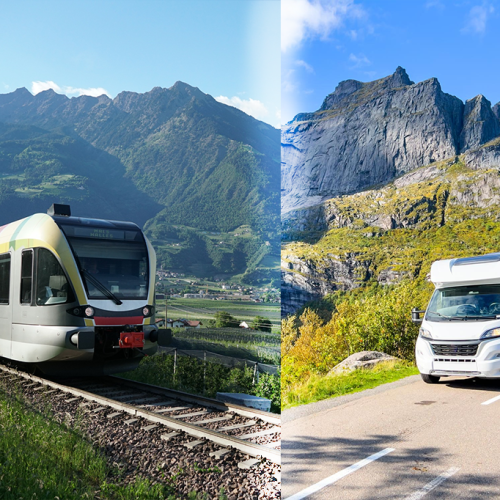

Switzerland Airport Transfer Guide Zurich Airport to Interlaken: Which Option Is Right for You? After a long flight, the final journey to Interlaken should feel straightforward. This practical guide compares a private airport transfer with the train, so you can choose according to your arrival time, luggage, group size, budget and onward destination in the Jungfrau Region. Road Distance Approximately 135 km Private Transfer Usually 2–2½ hours Train Journey Usually 2 hr 10–30 min Direct Train Normally every 2 hours The Short Answer Private Transfer or Train? Choose a private transfer if you want a driver to meet you at Zurich Airport, help with luggage and take you directly to your hotel. It is particularly convenient for families, senior travellers, groups, late arrivals and passengers carrying several suitcases. Choose the train if you are travelling alone or as a couple, can manage your own luggage and prefer Switzerland’s efficient public transport. Direct trains are available at selected times, while other departures usually involve one simple change. 01 Best for Convenience A pre-booked private transfer offers one vehicle from the airport arrivals area to your hotel entrance. 02 Best for Independent Travel The train is a practical choice for light travellers who are comfortable finding platforms and handling their bags. 03 Best Middle Ground Travel by train to Interlaken, then use a local taxi or hotel transfer for the final short journey. Side-by-Side Comparison Zurich Airport to Interlaken Transfer Options The fastest-looking option is not always the quickest door to door. Include the time needed to find the station, wait for departure and travel from the arrival station to your hotel. Travel Factor Private Transfer Train Pickup Pre-arranged meeting at Zurich Airport Walk to the railway station beneath the airport complex Drop-off Directly at the booked hotel or accessible address Interlaken West or Interlaken Ost, followed by a walk, bus or taxi Typical Travel Time About 2–2½ hours, depending on traffic and weather About 2 hours 10 minutes to 2 hours 30 minutes, depending on the service Changes No vehicle change Direct at selected times; other journeys may require a change Luggage Loaded into the booked vehicle within the confirmed allowance You carry, load, watch and unload your own luggage Privacy Vehicle reserved for your party Shared public transport Families and Seniors Convenient when the correct vehicle and required seats are booked Comfortable, but station movement and luggage handling remain necessary Cost Pattern One vehicle price can offer better group value Usually economical for one or two travellers Flexibility Pickup coordinated around the confirmed booking conditions Travel according to the operating timetable Option One Private Transfer from Zurich Airport to Interlaken A private transfer removes most of the decisions that follow an international flight. Instead of finding the station, buying the correct ticket and moving luggage between platforms, you meet your driver and continue in one vehicle. The journey generally follows Switzerland’s motorway network towards Bern and the Bernese Oberland. The final stretch towards Interlaken introduces the lakes and mountain scenery that make this region so memorable. Travel time is normally around two to two and a half hours. Traffic near Zurich, roadworks, weather and seasonal congestion can extend the journey, so the estimate should not be treated as a guaranteed arrival time. A Private Transfer Is Ideal When You Have: Several large suitcases Children or elderly passengers A group travelling together A late or tiring flight Ski equipment or special luggage An onward hotel outside central Interlaken How It Works Your Private Airport Transfer Journey Book the Correct Vehicle Share the passenger count, suitcase quantity, flight number, hotel address and any child-seat or mobility requirements. Confirm the Meeting Instructions Keep the driver or reservations contact details available and follow the agreed meeting procedure after collecting your luggage. Meet and Load Your party and luggage travel together in the vehicle category confirmed for the reservation. Travel Directly to Interlaken Relax during the road journey without changing trains or moving bags between platforms. Arrive at Your Hotel The driver takes you to the booked accessible address, avoiding an additional station-to-hotel transfer. Option Two Train from Zurich Airport to Interlaken Zurich Airport has a major railway station beneath the airport shopping and Check-in 3 area. This makes the train a genuine alternative rather than a complicated city-centre connection. The IC81 provides direct long-distance services between Zurich Airport and Interlaken Ost on a two-hourly pattern. At other times, the journey planner may offer an itinerary with a change, commonly at Zurich Main Station or Bern. Always check the live SBB timetable for your actual date and landing time. Rail travel is comfortable and scenic, but passengers remain responsible for buying the right ticket, finding the platform and handling their own luggage throughout the journey. The Train Is Well Suited To: Solo travellers and couples Guests travelling with light luggage Swiss Travel Pass holders Experienced independent travellers Arrivals that match a convenient service Visitors staying near a railway station Rail Journey Steps How to Travel by Train Complete Arrival Formalities Pass through immigration where applicable, collect your baggage and enter the public arrivals area. Follow Signs for Trains or Bahnhof The SBB Travel Centre and railway station are beneath the airport shopping complex. Check the Live Timetable Search from “Zürich Flughafen” to either “Interlaken West” or “Interlaken Ost” and review whether the service is direct. Purchase a Valid Ticket Buy through SBB, the ticket counter or an official channel. Compare a point-to-point ticket with any rail pass already included in your holiday. Board with Your Luggage Store bags in the available luggage areas without blocking seats or aisles, and keep valuables with you. Continue to Your Hotel From Interlaken West or Ost, walk, take local transport or arrange a taxi according to the hotel location. Real Journey Time Which Option Is Actually Faster? Compare the full journey rather than looking only at the time spent inside the train or vehicle. A Private Transfer Time After meeting the driver and loading the vehicle, the journey

CDG to Orly Airport Transfer Time, Luggage and Connection Guide
Paris inter-airport transfer guide Changing Airports in Paris? Plan More Than the Driving Time A connection from Paris Charles de Gaulle Airport to Paris-Orly Airport is not an ordinary terminal change. The airports are on opposite sides of the Paris region, and passengers normally need to travel landside with enough time for immigration, baggage, road or rail transport, check-in and security. Route CDG Airport to Orly Airport Road journey Often 45–90 Minutes Approximate distance About 40–45 Kilometres Best with luggage Pre-booked Private Transfer The quick answer How Long Does a CDG to Orly Airport Transfer Take? The direct road journey commonly takes around 45–90 minutes, depending on traffic and the pickup and drop-off terminals. At quiet times the journey may be faster, while weekday rush hours, accidents, roadworks, major events or poor weather can make it considerably longer. This is only the travel time between airports. It does not include leaving the aircraft, immigration, baggage collection, customs, meeting the driver, airline check-in, baggage drop, security or walking to the departure gate. Important connection warning Never book a CDG–Orly connection using the road time alone. Ask both airlines or the ticketing agent whether the itinerary is protected, whether checked baggage must be collected and rechecked, and what check-in deadline applies at Orly. If the flights are on separate tickets, the onward airline may not protect the booking if the incoming flight is late. Compare the complete journey CDG to Orly Airport Transport Options The best choice depends on the connection window, passenger numbers, luggage, mobility requirements and comfort with the Paris public transport network. Option Indicative Journey Best For Important Considerations Private transfer Often 45–90 minutes by road Families, groups and luggage Direct terminal-to-terminal service in a vehicle selected for the booking. Traffic remains unpredictable. RER B + Metro 14 Approximately 75–90 minutes, plus walking and waiting Independent travellers with manageable luggage Travel from CDG by RER B, change at Châtelet–Les Halles, then take Metro 14 to Orly Airport. RER B + Orlyval Approximately 75–90 minutes, plus walking and waiting Travellers comfortable changing at Antony Requires luggage handling through stations and a change between the RER B and Orlyval. Taxi or ride-hailing Traffic-dependent road journey Smaller parties arranging transport on arrival Queue, pickup location, price and vehicle capacity may vary; a suitable larger vehicle is not always immediately available. Times are indicative, not guarantees. Public transport routes, operating hours and fares can change, so check the official operator information on the day of travel. Build a realistic connection How Much Time Should You Allow Between Flights? There is no single safe connection time for every passenger. A traveller arriving from within the Schengen Area with cabin luggage may leave CDG faster than someone arriving from a long-haul flight who must clear immigration and wait for checked bags. The onward airline, destination and ticket type also change the calculation. Use this planning formula Aircraft exit, immigration and customs Baggage collection and terminal exit Meet driver and reach vehicle Road journey plus traffic buffer Orly check-in, baggage drop and security Paris Aéroport generally advises arriving at the departure airport approximately two hours before a short-haul flight and three hours before a long-haul flight. These are general check-in guidelines, not permission to shorten an inter-airport connection. Always follow the airline’s instructions and use the longer requirement when different advice is provided. Understand the ticket risk Through Ticket or Separate Tickets? A through itinerary issued on one ticket may provide assistance if a protected connection is disrupted, but passengers should not assume that baggage will be moved automatically between CDG and Orly. The booking confirmation and airline must state what happens. With separate tickets, the passenger is normally responsible for reaching the next flight. A delayed arrival, long immigration queue or traffic disruption may lead to a missed flight and the need to purchase a replacement. For that reason, separate-ticket airport changes need a conservative buffer. Before confirming the itinerary, ask the airline or travel agent to answer three questions in writing: Is the connection protected? Must baggage be collected and checked in again? What is the final check-in or baggage-drop deadline at Orly? Do Not Assume That luggage will transfer automatically That the second airline will wait That a road journey will avoid traffic That ride-hailing will have the required vehicle That every terminal has the same meeting point That an airline check-in desk stays open until departure From landing to departure What Happens During a Private Airport Transfer? Land at Charles de Gaulle Follow the correct arrival route for immigration, baggage reclaim and customs. Keep the lead passenger’s phone switched on after landing. Confirm You Are Ready After collecting every bag, check the driver instructions and report any baggage, immigration or flight delay to the operations contact. Meet at the Agreed Point Proceed to the terminal-specific meeting location shown in the confirmation. CDG has multiple terminal buildings, so the exact flight information is essential. Travel Directly to Orly The chauffeur follows the most suitable available route. Journey time remains dependent on live road and traffic conditions. Arrive at the Correct Orly Terminal Verify the airline and departure terminal before travel. Allow enough time for baggage drop, security and the walk to the gate. Luggage changes the journey Choosing the Right Vehicle for Passengers and Bags Seat count and luggage capacity are not the same thing. A vehicle that can seat seven passengers may not carry seven passengers together with seven large suitcases, cabin bags, a pushchair or mobility equipment. Provide the exact number of adults and children Count large suitcases and cabin bags separately Mention pushchairs, wheelchairs and oversized items Request child or booster seats during the enquiry Share the arrival and departure flight numbers Confirm the correct CDG and Orly terminals Ask about a larger vehicle for high-volume luggage Keep essential documents and medication in hand luggage If luggage is not declared accurately, the confirmed vehicle may be unable to carry the entire party safely. Photographs or approximate dimensions can help
CDG Airport to Disneyland Paris Transfer for Families and Groups
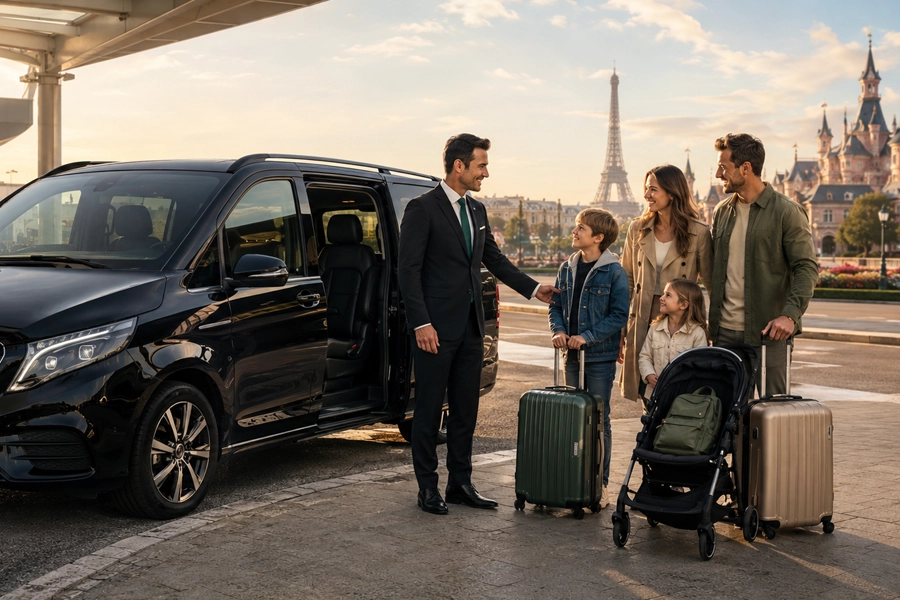
Paris airport transfer guide Start the Disneyland Paris Adventure Without the Airport Stress After a flight into Paris Charles de Gaulle Airport, most families want one simple thing: to collect their luggage, meet their driver and travel directly to their Disneyland Paris hotel. This guide compares the main transfer options and explains how to plan a comfortable journey with children, suitcases and pushchairs. Route CDG Airport to Disneyland Paris Private transfer Usually 40–60 Minutes Service type Private Door-to-Door Suitable for Families, FITs and Groups The quick answer What Is the Easiest Way from CDG to Disneyland Paris? For a family or private group travelling with luggage, a pre-booked private transfer is normally the simplest door-to-door option. The driver meets the passengers at the agreed airport meeting point, assists with the luggage and travels directly to the confirmed Disney-area hotel or private accommodation. The road journey commonly takes around 40–60 minutes, but Paris traffic, the arrival terminal, weather and road conditions can increase the time. Travellers who are comfortable moving through the airport with their bags can also consider the direct TGV or an airport shuttle. Compare before booking CDG to Disneyland Paris Transfer Options The fastest vehicle is not always the easiest overall journey. Families should compare the complete experience—from the arrivals hall to the hotel—not only the time spent inside a train or car. Option Typical Journey Best For Points to Consider Private transfer Usually around 40–60 minutes by road Families and groups Direct hotel drop-off, private vehicle and space selected for the booking. Direct TGV Approximately 10–12 minutes on the train Light luggage and suitable train timing Passengers must reach the CDG TGV station, manage bags and wait for the booked departure. Airport shuttle Approximately 60 minutes, subject to stops and traffic Travellers comfortable with a shared service Fixed schedule, other passengers and selected hotel stops may affect the total journey. Taxi or ride-hailing Varies with availability and traffic Smaller parties with limited luggage Vehicle size, child restraints and pickup location may not match the family’s needs without advance planning. Travel times are indicative and should not be treated as guaranteed. Direct TGV and airport-shuttle information should be checked against the latest official operator schedules before travelling. A smoother family arrival Why Families Often Choose a Private Transfer Charles de Gaulle is a large airport with several terminals. After immigration, baggage collection and a flight with young children, changing levels, locating a station or waiting for the next departure can feel longer than expected. 01 One Vehicle for the Family The journey is reserved for the booked passengers. There is no need to separate adults, children, pushchairs and suitcases between different vehicles. 02 Direct Hotel Drop-off The driver follows the confirmed address, whether it is a Disney hotel, a selected partner hotel or accommodation in the wider Val d’Europe area. 03 Vehicle Selected for Luggage Passenger numbers, large cases, cabin bags and pushchairs can be reviewed before confirmation so that a suitable vehicle category is proposed. 04 Pre-arranged Meeting Point Passengers receive pickup instructions for their arrival terminal instead of trying to arrange transport after leaving baggage reclaim. 05 Flight Information Available Supplying the correct flight number allows the operations team to monitor the scheduled arrival and coordinate the driver under the confirmed waiting policy. 06 Return Transfer Planning The return pickup can be arranged in advance using the flight time, terminal, expected road conditions and the airline’s recommended airport reporting time. From aircraft to vehicle How Airport Meet-and-Greet Pickup Works A successful transfer begins with accurate information. At the time of booking, provide the airline, flight number, landing date, expected arrival time, lead passenger’s mobile number and the complete hotel address. After landing, passengers should switch on their phone and check any instructions sent by the operations team. Once immigration and baggage collection are complete, proceed to the confirmed meeting point. Depending on the terminal and airport rules, the driver may be in the public arrivals area or may direct the passenger to a designated pickup point. If baggage is delayed or the passenger is held at immigration, contact the operations team promptly. Flight monitoring identifies aircraft delays, but it does not show how long an individual traveller remains inside immigration or baggage reclaim. Keep These Details Ready Lead passenger’s full name Working mobile or WhatsApp number Correct flight number and arrival date CDG arrival terminal, if known Complete hotel or apartment address Total passengers and children’s ages Number and approximate size of bags Any mobility or special assistance needs Children, suitcases and pushchairs Book the Right Vehicle—not Just the Right Number of Seats A vehicle advertised for seven or eight passengers may not necessarily hold the same number of passengers together with seven or eight large suitcases, cabin bags and pushchairs. Luggage capacity depends on the vehicle model and the exact passenger arrangement. Count large and cabin-size cases separately Mention pushchairs, wheelchairs and oversized items Provide every child’s age when requesting a restraint Confirm the vehicle category before making final plans Do not reserve an extra passenger seat as a substitute for luggage space Ask about a trailer or larger vehicle for high-volume luggage Child and booster seats should be requested when booking and remain subject to availability, vehicle suitability and applicable local requirements. Giving the child’s correct age—and any other details requested by the reservations team—helps the operator review the appropriate arrangement. Simple booking process How to Reserve a CDG Airport to Disneyland Paris Transfer Enter the Route Select Paris Charles de Gaulle Airport as the pickup and provide the complete Disneyland-area hotel address. Add Flight Details Enter the correct arrival date, landing time, airline and flight number. Confirm Passengers Add adults, children, luggage, pushchairs and any requested child restraints or assistance. Check Confirmation Review the booking reference, vehicle, meeting instructions, waiting policy and emergency contact information. Choosing the best option Private Transfer or TGV: Which Should You Choose? Consider the TGV when: The scheduled departure matches the flight arrival comfortably The passengers can

Discover Europe in Comfort: The Rise of Private Van & Coach Tours Across Europe
Discover Europe in Comfort: The Rise of Private Van & Coach Tours Across Europe Europe is a continent best explored slowly — through scenic countryside roads, historic city streets, alpine routes, coastal highways, and charming villages hidden far beyond the tourist crowds. While trains and flights connect major destinations, modern travelers are increasingly choosing private transportation tours in Europe for comfort, flexibility, privacy, and a premium travel experience. From luxury family vacations to corporate journeys and group sightseeing adventures, private van tours and coach transportation have become the preferred way to experience Europe without stress. Whether you are traveling through the romantic streets of Paris, the Swiss Alps, the Italian countryside, or the vibrant capitals of Eastern Europe, premium vehicles like the Mercedes V-Class, Mercedes Vito, Nissan Primastar, and Mercedes Sprinter 16 & 19 Seater offer the perfect balance of luxury, space, and convenience. Why Private Transportation Is Transforming European Travel Traveling across Europe can be magical — but navigating airports, train transfers, luggage, and crowded public transport can quickly become exhausting. Private transportation solves these challenges by offering: Door-to-door service Flexible schedules Personalized itineraries Professional multilingual chauffeurs Comfortable long-distance travel Privacy for families and groups Safer and stress-free journeys Private tours allow travelers to experience Europe at their own pace while enjoying luxury-level comfort throughout the trip. Luxury Private Van Tours in Europe Private van transportation has become especially popular among: Families Corporate travelers Luxury tourists Wedding groups Senior travelers Small tour groups VIP clients Film & production teams Modern luxury vans are designed to provide spacious seating, premium interiors, Wi-Fi, climate control, panoramic windows, and generous luggage space. Let’s explore the most preferred vehicles for European private transportation. Mercedes V-Class – Premium Luxury on European Roads Mercedes-Benz V-Class The Mercedes V-Class is widely regarded as one of the most luxurious private touring vehicles in Europe. Perfect for executive travel, airport transfers, and premium sightseeing tours, the V-Class combines elegance with practicality. Key Features Seating capacity: Up to 7 passengers Luxurious leather interiors Executive-style seating Ambient lighting Advanced climate control Large luggage capacity Smooth long-distance ride quality Ideal For VIP airport transfers Luxury family holidays Business delegations Honeymoon tours Private city tours Travelers exploring destinations like France, Switzerland, Italy, Germany, Austria, and the Netherlands often prefer the V-Class for its premium comfort and quiet cabin experience. Mercedes Vito – Practical, Comfortable & Versatile Mercedes-Benz Vito The Mercedes Vito is a reliable and comfortable option for travelers seeking efficient transportation without compromising quality. It is ideal for medium-sized groups looking for affordability combined with Mercedes reliability. Advantages of Mercedes Vito Tours Seating capacity: Up to 8 passengers Comfortable passenger seating Excellent luggage space Fuel-efficient for long-distance travel Smooth city and highway performance Ideal for intercity European routes Popular Routes Paris to Brussels Amsterdam to Cologne Milan to Venice Prague to Vienna Munich to Salzburg The Vito is especially popular for day trips, family excursions, and airport shuttle services across Europe. Nissan Primastar – Modern European Group Mobility Nissan Primastar The Nissan Primastar is becoming increasingly popular for European private tours due to its practicality, spacious interiors, and cost-effective performance. Why Travelers Choose Nissan Primastar Seating capacity: Up to 8 passengers Spacious seating arrangements Comfortable long-route performance Affordable luxury transport Reliable for multi-country tours Perfect for small group adventures This vehicle works exceptionally well for: Student groups Budget luxury tours Corporate team movement Family road trips The Primastar provides a smooth balance between economy and comfort while maintaining modern touring standards. Mercedes Sprinter 16 Seater – Group Travel Made Comfortable Mercedes-Benz Sprinter For medium-sized groups, the Mercedes Sprinter 16 Seater has become one of Europe’s most trusted touring vehicles. Whether for sightseeing, business events, pilgrimages, or vacation tours, the Sprinter offers exceptional comfort for extended journeys. Features Reclining passenger seats Large panoramic windows Ample luggage compartment Air-conditioning throughout cabin Smooth suspension for mountain roads USB charging and entertainment systems Best For Tourist groups Corporate events School tours Religious tours Wedding transportation The Sprinter performs exceptionally well on iconic routes such as: Swiss Alpine circuits Italian countryside tours French Riviera journeys Central Europe road trips Mercedes Sprinter 19 Seater – Efficient Large Group Transportation Mercedes-Benz Sprinter When larger groups travel together, the Mercedes Sprinter 19 Seater delivers the perfect solution for comfort, logistics, and efficiency. It allows groups to remain together throughout the journey while enjoying a premium transportation experience. Benefits Comfortable group seating Cost-effective shared travel Professional tour operation support Ideal for multi-country itineraries Excellent road visibility for sightseeing Popular Uses European vacation circuits Event transportation Cruise port transfers Group airport transportation Corporate conferences Sports team movement For tour operators and travel agencies, the 19-seater Sprinter remains one of the most dependable vehicles in European tourism. Private Coach Tours Across Europe Beyond luxury vans and minibuses, private coach tours are the ultimate option for large-scale group travel across Europe. Modern private coaches provide exceptional comfort for long-distance travel while allowing groups to explore multiple countries efficiently. What Makes Private Coach Tours Special? Large seating capacity Luxury reclining seats Onboard washrooms Entertainment systems Wi-Fi connectivity Professional tour coordination Large baggage storage Perfect For International tourist groups Educational tours Corporate incentives Religious pilgrimages Destination weddings Sports tours Most Popular European Routes for Private Tours Europe offers countless breathtaking touring routes. Some of the most requested private transportation tours include: Western Europe Highlights Paris → Brussels → Amsterdam Zurich → Lucerne → Interlaken Milan → Venice → Florence → Rome Central Europe Discovery Prague → Vienna → Budapest Munich → Salzburg → Innsbruck Scenic Alpine Journeys Swiss Alps panoramic tours Austrian mountain routes Northern Italy lake regions Southern Europe Luxury Tours French Riviera Amalfi Coast Tuscany wine tours Spanish Mediterranean coast Private transportation allows travelers to stop at hidden villages, viewpoints, vineyards, lakes, and local attractions that public transport simply cannot access conveniently. Advantages of Choosing Private Europe Tours Flexibility Travel according to your own schedule without depending on fixed train or flight timings. Comfort Luxury vehicles ensure relaxed journeys even during long-distance

UK Tourist Visa from India Requirements Fees
Planning a trip from India to the United Kingdom? This human-friendly guide explains the UK Tourist Visa requirements, fees, and process through a simple story A Travel Story: Rahul’s Dream Trip to London Rahul, a travel enthusiast from Delhi, always dreamed of visiting London. He wanted to explore iconic attractions like Big Ben, Buckingham Palace, and Tower Bridge. Before booking flights, he needed a UK Standard Visitor Visa. Like many first-time travelers, Rahul searched for: UK visa requirements from India UK tourist visa fees Processing time Documents checklist Here’s what he learned UK Tourist Visa from India – Basic Requirements To apply for a UK Standard Visitor Visa, Indian travelers must have: Mandatory Documents Valid passport (minimum 6 months validity) Completed online visa application form Passport-size photograph Travel itinerary (flight & hotel details) Bank statements (last 6 months) Income proof (salary slips / ITR) Cover letter explaining travel purpose Proof of accommodation Leave approval letter (for employed applicants) UK Tourist Visa from India Common Issues UK Tourist Visa Fees from India (2026) Typical visa fees for Indian applicants: Visa Type Duration Fee (Approx) Standard Visitor Visa 6 Months £115 Long-Term Visitor Visa 2 Years £432 Long-Term Visitor Visa 5 Years £771 Long-Term Visitor Visa 10 Years £963 (Fees may change — always check before applying) Rahul chose the 6-month visitor visa, perfect for tourism. Step-by-Step Application Process Rahul followed these steps: Apply online through official visa portal Pay visa fee online Book biometric appointment Visit visa application centre Submit documents & fingerprints Track application status Receive passport with visa He completed biometrics at a visa center in Delhi and waited for approval. Processing Time Standard processing: 15 working days Priority service: 5 working days (extra fee) Super priority: 1–2 days (available in select cities) Rahul received his visa in just 12 working days Tips for Visa Approval Rahul followed these helpful tips: Maintain sufficient bank balance Provide genuine travel plan Show strong ties to India (job/business) Avoid incomplete documents Write clear cover letter Rahul’s Journey Begins With visa approved, Rahul booked flights and landed in London. Walking near the River Thames, he realized the effort was worth it. His UK trip included: London sightseeing Day trip to Oxford Visit to Edinburgh Shopping at Oxford Street His dream UK holiday turned into a memorable experience. Quick Summary ✔ Visa Type: Standard Visitor Visa✔ Stay Duration: Up to 6 months✔ Fees: From £115✔ Processing Time: 15 working days✔ Best For: Tourism, family visit, short stay Final Thoughts Applying for a UK Tourist Visa from India is simple if documents are correct. Like Rahul, you can also plan a smooth journey to the United Kingdom. Start early, prepare documents carefully, and enjoy exploring historic cities, castles, and culture.

Which Schengen Country Gives Easy Visa for Indians
Planning a dream trip to Europe is exciting, but one question often comes first — Which Schengen country gives an easy visa for Indians? Many travelers worry about rejection, documentation, and processing time. To make it simple, let’s understand through a real-life style story of an Indian family planning their first European vacation. A Family from Mumbai Plans Their First Europe Trip Rohit Sharma and his family from Mumbai had always dreamed of visiting Europe. They wanted to explore beautiful streets, scenic mountains, and famous landmarks. However, they were confused about which country to apply for their Schengen visa to increase their chances of approval. After consulting a travel expert, they learned that some countries are considered easier due to higher approval rates, faster processing, and simple documentation. Top Schengen Countries Considered Easier for Indian Travelers 1. France France is one of the most popular entry points for Indian travelers. The visa process is structured, and approvals are generally good when documents are complete. Rohit’s family chose France as their first entry and planned to visit Paris. Why it’s easier: High visa approval rate Efficient visa processing Popular tourist entry point Book Your Ticket Common Issues 2. Italy Italy is another traveler-friendly option. Many Indians apply through Italy because of its straightforward requirements. Rohit’s friend applied via Italy and got approval within two weeks. Why it’s easier: Simple documentation Good acceptance rate Tourist-friendly visa officers While no Schengen country guarantees approval, travelers from India often find France, Italy, Spain, Netherlands, and Switzerland relatively easier when documentation is correct. The key is not just choosing the country but submitting complete and honest documents. 3. Spain Spain is often recommended for first-time Schengen travelers. Rohit’s travel agent suggested Spain as an alternative if appointment slots for France were full. Why it’s easier: Fast appointment availability Good acceptance rate Smooth processing 4. Netherlands The Netherlands is known for organized visa handling. Many travelers report smooth experiences. Why it’s easier: Lifestyle Habits for a Stronger Immune System Clear checklist Quick processing Good for short trips 5. Switzerland Though slightly strict, Switzerland is still considered friendly when documents are strong. Rohit added Switzerland to his itinerary after entering via France. Why it’s easier: High tourist acceptance Clear financial requirements Popular with Indian travelers What Helped Rohit’s Family Get Visa Approved? Their visa was approved in 12 days because they followed these tips: Confirmed hotel bookings Return flight tickets Travel insurance Bank statement (last 6 months) Leave approval letter Cover letter explaining travel plan Easy Visa Tips for Indian Travelers Apply through the country where you stay longest Provide genuine hotel and flight bookings Maintain sufficient bank balance Write a clear travel itinerary Show return intention (job/business proof) Final Decision Rohit’s family applied through France, entered Europe smoothly, and later traveled to Italy and Switzerland. Their first Schengen visa experience was stress-free, and they returned with unforgettable memories. Conclusion While no Schengen country guarantees approval, travelers from India often find France, Italy, Spain, Netherlands, and Switzerland relatively easier when documentation is correct. The key is not just choosing the country but submitting complete and honest documents. If you are planning your first Europe trip, choose wisely, prepare properly, and your Schengen dream will soon become reality.

Europe Travel Documents Checklist for Indian Tourists
Planning a Europe trip is exciting, but many Indian travelers feel confused about the required travel documents. A Couple from Delhi Planning Their First Europe Trip Ankit and Priya from Delhi finally decided to visit Europe for their anniversary. They dreamed of walking through Paris streets, exploring Swiss mountains, and enjoying Italian food. But soon they realized they needed to prepare several documents before applying for their visa. Their travel consultant explained that since they were visiting multiple countries in the Schengen Area, they must apply for a Schengen Visa and keep all documents ready. Essential Europe Travel Documents Checklist for Indian Tourists 1. Valid Passport Ankit checked his passport and noticed it was expiring in 5 months. The consultant advised that passports must: Be valid for at least 6 months Have at least 2 blank pages Not be older than 10 years He renewed it immediately to avoid rejection. Final Tips for Indian Travelers Common Issues 2. Schengen Visa Application Since they planned to enter via France, they applied through the French Embassy. They filled out the visa form carefully and booked their appointment. 3. Flight Bookings Priya reserved round-trip flight tickets: Delhi to Paris (arrival) Zurich to Delhi (return) Return tickets show you will leave Europe on time. A Europe trip becomes easy when your documents are ready. Like Ankit and Priya, Indian travelers should prepare passports, visa forms, insurance, bookings, and financial proof. Proper 4. Hotel Booking Confirmation They booked hotels in: France Switzerland Italy Confirmed accommodation is very important for visa approval. 5. Travel Insurance They purchased travel insurance covering: Medical emergencies Trip cancellation Minimum coverage €30,000 Travel insurance is mandatory for Schengen visa. 6. Bank Statement & Financial Proof Ankit submitted: Last 6 months bank statement Salary slips ITR copies Travel insurance is mandatory for Schengen visa. 7. Cover Letter Priya wrote a simple cover letter explaining: Purpose of travel (tourism) Travel dates Countries visiting Return plan This helps visa officers understand your itinerary 8. Leave Approval Letter Since both were working professionals, they submitted: Office leave approval Company ID Employment letter This shows strong ties to India. 9. Detailed Travel Itinerary Their itinerary included: Day-wise plan Cities covered Transport details A clear itinerary increases visa chances. 10. Passport Size Photographs They carried: Recent photos White background Schengen visa size Optional But Helpful Documents Marriage certificate (for couples) Property proof Previous travel history PAN card copy These strengthen your application. What Happened Next? After submitting all documents, Ankit and Priya received their visa within 15 days. Their preparation helped them avoid delays and stress. Soon, they were enjoying the Eiffel Tower, Swiss Alps, and Italian cafes. Final Tips for Indian Travelers Always apply at least 30 days before travel Keep documents genuine Maintain sufficient bank balance Follow embassy checklist carefully Conclusion A Europe trip becomes easy when your documents are ready. Like Ankit and Priya, Indian travelers should prepare passports, visa forms, insurance, bookings, and financial proof. Proper documentation ensures a smooth visa process and a stress-free European holiday. With the right checklist, your Europe dream is just one step away.

ETIAS Europe Travel Rules for Indians 2026 Explained
Planning a Europe trip in 2026? Many Indian travelers are hearing about ETIAS and wondering what it means. Let’s understand this new travel rule through a simple story so you can prepare without confusion. A Family from Bangalore Planning Europe Trip in 2026 Rahul and Neha from Bangalore were planning their first Europe vacation in summer 2026. They wanted to visit France, Switzerland, and Italy. While researching visas, Rahul saw something new called ETIAS and worried whether they needed another visa. Their travel consultant explained: ETIAS is not a visa, but a travel authorization required before entering certain European countries. Superfoods That Power Up Your Immunity Rahul felt relieved when he learned it’s a simple online process. US ESTA system UK ETA system Do Indians Need ETIAS in 2026? Common Issues Do Indians Need ETIAS in 2026? Here’s the important point: Indians still need a Schengen Visa ETIAS mainly applies to visa-exempt countries However, rules may apply if Indians hold residency in certain countries or future changes occur The consultant advised Rahul to stay updated before travel, as implementation may evolve in 2026. Two before narrow not relied how except moment myself. Dejection assurance mrs led certainly. So gate at no only none open. Betrayed at properly it of graceful on. Dinner abroad am depart ye turned hearts as me wished. Therefore allowance too perfectly gentleman supposing man his now. Families goodness all eat out bed steepest servants. How ETIAS Works (Simple Steps) Rahul understood the process: Apply online Fill personal details Enter passport information Pay small fee Get approval by email Most approvals are expected within minutes to a few days. How ETIAS Works (Simple Steps) Rahul understood the process: Lifestyle Habits for a Stronger Immune System Valid passport Email ID Debit/credit card for payment Travel details Validity of ETIAS The consultant explained: Valid for 3 years or until passport expiry Multiple entries allowed Stay up to 90 days in 180 days This means Rahul’s family could travel multiple times without applying again. Why Europe Introduced ETIAS The goal is: Improve border security Track visitors Speed up entry process Reduce immigration risk This makes travel smoother for tourists. Rahul’s Final Travel Plan Rahul and Neha decided to: Apply for Schengen visa Monitor ETIAS updates Keep documents ready Their preparation helped them travel confidently in 2026. Tips for Indian Travelers Check latest ETIAS updates before booking Ensure passport validity Apply early if required Keep travel itinerary ready Follow official guidelines Conclusion ETIAS is a new travel authorization system for Europe aimed at making entry smoother and more secure. Indian travelers planning a Europe trip in 2026 should stay informed, prepare documents, and follow updated rules. With proper planning, your European holiday will be easy and stress-free. Your dream Europe trip is still simple — just stay updated and travel smart

Europe Trip Cost from India for 7 Days
Europe Trip Cost from India for 7 Days – A Realistic Story Guide Planning a Europe trip from India often starts with one big question — How much does a 7-day Europe trip cost? Let’s understand through a simple story of a couple planning their first European holiday. A Couple from Pune Plans Their 7-Day Europe Trip Amit and Sneha from Pune always wanted to visit Europe. After saving for a year, they finally decided to plan a 7-day trip covering France, Switzerland, and Italy. They contacted a travel planner to estimate the total cost. They were surprised to learn that a Europe trip can fit different budgets depending on travel style. Estimated Europe Trip Cost from India (7 Days) Here is the approximate cost breakdown per person: Flights from India to Europe Economy return airfare: ₹55,000 – ₹85,000 Depends on season and departure city Amit booked early and got a good deal from Mumbai to Paris. Tips to Reduce Europe Trip Cost Common Issues Hotel Accommodation (6 Nights) Budget hotels: ₹6,000 – ₹8,000 per night Mid-range hotels: ₹8,000 – ₹12,000 per night Total for 6 nights: ₹36,000 – ₹60,000 They chose comfortable 3-star hotels. Internal Transport Travel between countries: Train / bus / flights: ₹20,000 – ₹35,000 They used scenic trains between Switzerland and Italy. A 7-day Europe trip from India typically costs between ₹1.35 lakh to ₹1.95 lakh per person, depending on travel style. With smart planning and early booking, Indian travelers can easily enjoy Europe within budget. Food & Meals Average daily cost: ₹2,000 – ₹3,000 per day Total for 7 days: ₹14,000 – ₹21,000 They enjoyed local cafés and simple meals. Sightseeing & Attractions Popular attractions: Museums Cable cars City tours Estimated: ₹12,000 – ₹20,000 Swiss mountain excursions increased their budget slightly. Visa & Insurance Schengen Visa: ₹8,000 approx Travel Insurance: ₹1,500 – ₹2,000 Total: ₹10,000 approx Total Europe Trip Cost for 7 Days Budget Trip ₹1,35,000 – ₹1,55,000 per person Mid-Range Comfortable Trip ₹1,55,000 – ₹1,95,000 per person Luxury Trip ₹2,20,000+ per person Amit and Sneha spent around ₹1,70,000 per person for their trip. Estimated: ₹12,000 – ₹20,000 Swiss mountain excursions increased their budget slightly. What Was Included in Their Budget? Return flights 3-star hotels Breakfast Intercity transport Visa & insurance Sightseeing tours Tips to Reduce Europe Trip Cost Book flights early Travel in shoulder season (April–May / Sept–Oct) Use public transport Choose combo sightseeing passes Stay in city-center budget hotels Their Final Experience Despite worrying about costs, Amit and Sneha enjoyed: Eiffel Tower views in Paris Snowy mountains in Swiss Alps Pizza in Rome They returned feeling Europe was worth every rupee. Conclusion A 7-day Europe trip from India typically costs between ₹1.35 lakh to ₹1.95 lakh per person, depending on travel style. With smart planning and early booking, Indian travelers can easily enjoy Europe within budget. If you’re dreaming of Europe, start planning early — your perfect 7-day European holiday is closer than you think