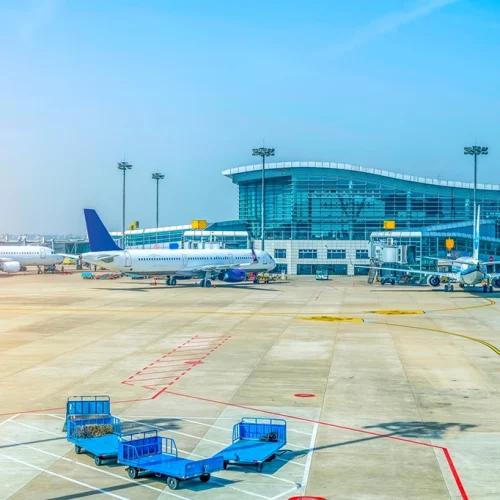

Quick answer: For a Paris airport transfer with 8–16 passengers, the suitable arrangement depends on the group’s luggage, flight schedule and destination as well as the number of seats required. Depending on availability, the group may travel in one larger vehicle or in multiple vehicles. Share every passenger’s flight details and the full luggage count when requesting a quote. Arranging a transfer for a group is different from booking a car for one or two travellers. Passengers may clear the airport at different times, baggage can take longer to collect, and one vehicle may not have enough room for both the full group and all its bags. A little planning before arrival helps travel agents, tour operators and group leaders coordinate the journey with fewer last-minute questions. This guide covers the main points to consider when arranging a Paris group airport transfer for 8–16 passengers, including airport details, vehicle planning, luggage and the pickup process. Paris Group Airport Transfer: Essential Information Travel detail What to confirm Group size Exact number of passengers, including children Airport Paris Charles de Gaulle (CDG), Orly (ORY), Beauvais–Tillé (BVA) or another specified airport Vehicle plan One suitable larger vehicle or more than one vehicle, subject to availability Luggage Number, type and approximate size of bags and any bulky items Flight details Airline, flight number, arrival time and passenger count for each flight Destination Complete hotel, apartment, venue or other drop-off address Pickup instructions Terminal meeting point, driver identification and group contact plan Airport terminals, road traffic, baggage delivery and access restrictions can affect the pickup. Confirm the final meeting instructions and journey details for the specific travel date. How to Choose a Transfer Arrangement for 8–16 Passengers The passenger count is only one part of vehicle planning. A group of eight with several large suitcases may need a different arrangement from a group of sixteen travelling with hand luggage. The supplier should review passenger and baggage requirements together before confirming a vehicle. Depending on local vehicle availability and the requirements of the journey, the transfer may be arranged in one larger vehicle or across multiple vehicles. If the group is split between vehicles, decide in advance who will travel in each one and how passengers will identify their vehicle at the airport. Arrangement May suit Details to check One larger vehicle A group that wants to travel together, when a suitable vehicle is available Seat count, luggage capacity, comfort and access to the destination Multiple vehicles A larger party, substantial luggage or passengers arriving on different flights Passenger allocation, meeting instructions and coordinated departure Separate pickups Groups with staggered arrivals or different terminal schedules Flight times, waiting arrangements, separate destinations and quote assumptions Why Passenger and Luggage Counts Both Matter A vehicle may have enough seats for the group but insufficient space for its luggage. Suitcase dimensions, cabin bags, pushchairs, wheelchairs, sports equipment and other bulky items can affect the arrangement. List the items as accurately as possible when requesting a quote. For a group transfer, provide: The total number of adults and children. The approximate number and size of checked suitcases and cabin bags. Details of pushchairs, wheelchairs or mobility equipment. Any sports equipment, musical instruments or oversized items. Child ages and any child-seat requirements. Booking note: Do not estimate luggage as “one bag per person” if the group will carry more. Accurate details help the supplier check whether the proposed vehicle plan can accommodate everyone and their belongings. Which Paris Airport Is the Group Using? Paris-area itineraries may use Charles de Gaulle, Orly or Beauvais–Tillé. Confirm the airport and terminal from each passenger’s itinerary before arranging the pickup. If the group is arriving on more than one flight, identify which passengers are on each flight and whether they are expected to meet at one airport or at different locations. For departures, allow enough time for the group to reach the airport and complete check-in and security procedures. The appropriate pickup time depends on the airport, destination, traffic conditions, airline guidance and the group’s circumstances. Confirm the proposed timing with the transfer provider. Plan a Clear Meeting Point at Arrivals After landing, passengers may be separated by immigration queues, baggage collection or terminal layout. A clear meeting plan helps the group find the driver and stay together. Before travel, share the agreed pickup instructions with the lead passenger, tour manager or all travellers as appropriate. Confirm: The exact terminal and meeting point. Whether the driver will meet the group inside arrivals or at another agreed location. How the driver will be identified. The lead passenger’s working mobile or WhatsApp number. What passengers should do if a flight is delayed or they cannot locate the driver. How the group will be divided if more than one vehicle is used. Use the pickup instructions confirmed by the provider for the booking. Airport access and waiting rules can differ, so avoid relying on a generic meeting-point description. Transfers for Groups Arriving on Different Flights If passengers are arriving at different times, send the flight information for each part of the group. Depending on the schedule and availability, the supplier can advise whether separate pickups or a coordinated arrangement is more suitable. Clarify whether passengers are willing to wait for others and whether the group has a fixed onward schedule. When several vehicles are planned, provide an allocation list showing which passengers and bags are assigned to each vehicle. This can make boarding and communication easier, especially when the group includes children, older travellers or passengers with mobility requirements. Paris Airport to Hotel, Venue or Other Destination Give the full destination address rather than only a hotel or neighbourhood name. For accommodation in a restricted or pedestrian area, the driver may need to use a nearby practical drop-off point. Share access notes, entrance details or a local contact number when available. If the group is continuing to more than one hotel or address, list each destination and the passengers travelling to it. Multiple drop-offs may affect the

Zurich Airport to Zermatt Transfer | Luggage & Täsch Guide
Switzerland Airport Transfer Guide Zurich Airport to Zermatt: Private Transfer, Train & Täsch Luggage Guide Zermatt is one of Switzerland’s most famous Alpine destinations, but it is also different from most airport-transfer routes because private vehicles cannot drive directly into the village. Travellers arriving at Zurich Airport can continue towards Zermatt by train, or book a private transfer to Täsch and complete the final short journey into Zermatt by local shuttle train or authorised local transport. This guide explains the practical differences between both options, with special attention to luggage, ski equipment, families, groups and the final transfer from Täsch to Zermatt. Travel Detail Practical Information Route Zurich Airport (ZRH) → Täsch → Zermatt Important Rule Zermatt is car-free; normal private vehicles can travel only as far as Täsch Road Distance to Täsch Approximately 230–250 km depending on the route Private Transfer Often around 3–3.5 hours to Täsch in normal conditions Täsch to Zermatt Local shuttle train takes about 12 minutes Best for Heavy Luggage Private car, van or minibus to Täsch with planned onward connection Journey times are indicative. Traffic, roadworks, weather, winter road conditions and railway timetable changes can affect the actual travel time. Zurich Airport to Zermatt: Quick Answer If you are travelling independently with light luggage and are comfortable changing trains, the railway is an excellent way to reach Zermatt. If you are travelling with several suitcases, children, elderly passengers, ski equipment or a larger group, a private transfer to Täsch can make the longest part of the journey much easier. The most important point is that a normal private vehicle cannot take you all the way into central Zermatt. Your road transfer ends at Täsch, where passengers continue approximately 5 km to Zermatt using the local shuttle train or another authorised local service. Why Does a Private Transfer End at Täsch? Zermatt is a car-free Alpine village. Private cars, rental vehicles, vans and normal coaches are not permitted to continue into the village. Täsch is the main road-transfer point for visitors arriving by private vehicle. The Matterhorn Terminal Täsch is designed specifically for this change between road transportation and the local connection to Zermatt. For travellers booking a private airport transfer, the journey therefore works in two stages: Zurich Airport → Täsch by private car, van or minibus. Täsch → Zermatt by shuttle train or authorised local transfer. This arrangement is normal for Zermatt and should be understood before booking so that passengers know exactly where the private vehicle can legally finish the journey. Private Transfer or Train from Zurich Airport to Zermatt? Travel Factor Private Transfer to Täsch Train to Zermatt Airport Pickup Pre-arranged driver pickup at Zurich Airport Passenger walks to Zurich Airport railway station Main Journey One private vehicle to Täsch Rail journey with connections depending on the selected service Final Stage Change at Täsch for the Zermatt shuttle Rail itinerary continues towards Zermatt Luggage Loaded into the private vehicle for the main road journey Passenger handles luggage throughout train connections Families & Groups Convenient when travelling together with several bags Practical if the group is comfortable managing stations and connections Ski Equipment Can be planned with the correct vehicle when declared in advance Passenger must carry and store ski equipment on the train Privacy Vehicle reserved for your party Shared public transport Best For Families, groups, heavy luggage and travellers wanting easier door-to-terminal transportation Solo travellers, couples and passengers comfortable using Swiss rail Taking the Train from Zurich Airport to Zermatt Switzerland’s railway network makes Zermatt accessible without using a private road vehicle. Passengers can begin directly from the railway station inside Zurich Airport and continue towards Zermatt using the connection shown in the live SBB timetable. Depending on the departure, the journey may involve changes at major Swiss stations such as Zurich HB, Bern, Visp or another connection point. The final rail section continues through the Mattertal valley towards Zermatt. When the train works well You are travelling alone or as a couple. You have manageable luggage. You are comfortable using railway platforms and connections. You do not need a private airport meet-and-greet. You are staying close to Zermatt station. Your arrival time matches a convenient connection. When the train can be less convenient You have several large suitcases. You are travelling with children. You have ski or snowboard equipment. You are travelling with elderly passengers. Your group needs to remain together. You are arriving after a long-haul flight. You prefer assistance with the main part of the luggage journey. Always check the live SBB timetable for the exact travel date because schedules, engineering work and connections can change. Why Travellers Choose a Private Transfer to Täsch 1. One vehicle for the longest part of the journey Passengers travel directly from Zurich Airport to Täsch without changing trains during the main three-hour-plus Alpine journey. 2. Easier with heavy luggage Suitcases are loaded into the booked vehicle at Zurich Airport and remain there until Täsch. 3. Better for families Parents travelling with children may also have pushchairs, baby bags, child seats and several pieces of luggage. A suitable private van can keep the group and belongings together. 4. Convenient for ski holidays Zermatt is a major ski destination. Ski bags, snowboards, boots and winter luggage take more space than standard suitcases, so the vehicle can be selected according to the declared equipment. 5. Suitable for private groups A group can travel together in one suitable vehicle instead of coordinating multiple railway tickets, platforms and connections. 6. Airport pickup after a long flight A pre-booked driver removes the need to navigate the railway system immediately after collecting luggage at Zurich Airport. What Happens When You Reach Täsch? Täsch is the normal transfer point for road passengers travelling to Zermatt. The Matterhorn Terminal Täsch provides access to the local shuttle railway. The shuttle journey to Zermatt takes around 12 minutes and services operate frequently throughout the day. For a smooth transfer, passengers should allow enough time to: Unload luggage from the private

Zurich Airport to Lucerne Transfer with Luggage | Private Van Guide
Airport Transfer Guide Landing at Zurich Airport and continuing to Lucerne is one of the most common first journeys for visitors starting a Switzerland holiday. The distance is relatively short, but the best transfer option can change completely when passengers are travelling with several suitcases, children, pushchairs, ski equipment or a larger group. Zurich Airport has rail connections toward Lucerne, while a pre-booked private transfer provides direct pickup from the airport and drop-off at a hotel, apartment or other confirmed address in Lucerne. This guide explains the practical differences between travelling by train and booking a Zurich Airport to Lucerne transfer with luggage, helping families, FIT travellers, small groups and travel agents choose the most suitable option. Route Zurich Airport (ZRH) to Lucerne Road Distance Approximately 60–70 km depending on the exact destination Private Transfer Usually around 50–70 minutes in normal traffic Train Direct services are available at certain times; some journeys require a change at Zurich HB Best for Heavy Luggage Private car, van or minibus Journey times are indicative. Traffic, roadworks, weather, flight delays and railway timetable changes can affect the actual travel time. Zurich Airport to Lucerne Transfer: Quick Answer If you are travelling alone or as a couple with one small suitcase each, the train between Zurich Airport and Lucerne can be a convenient option. If you are arriving with large suitcases, several bags, children, ski equipment or a group, a private transfer is usually easier because the journey becomes door-to-door. Your luggage is loaded into the vehicle at Zurich Airport and unloaded again at your confirmed destination in Lucerne. There is no need to move bags through a railway station, find the correct platform or arrange another taxi after reaching Lucerne station. Swiss Federal Railways currently lists IR75 services from Zurich Airport toward Lucerne, although in certain hours a change at Zurich HB may be required. Train schedules should always be checked for the exact travel date. Private Transfer or Train from Zurich Airport to Lucerne? Transport Option Best For Luggage Consideration Main Advantage Private Car Solo travellers and couples Suitable when luggage fits the confirmed vehicle capacity Direct airport-to-hotel transfer Private Van Families and small groups Better for several suitcases, pushchairs or additional equipment Group and luggage remain together Minibus Medium-sized groups Vehicle can be selected according to passenger and baggage requirements One vehicle for the complete group Train Independent travellers with light luggage Passengers handle and move their own bags Good public transport connectivity Taking the Train from Zurich Airport to Lucerne Switzerland has an excellent railway network, and Zurich Airport railway station is located directly within the airport complex. SBB lists direct IR75 services from Zürich Flughafen to Luzern. However, depending on the hour, passengers may need to change trains at Zurich Hauptbahnhof. For travellers with light luggage, the train can therefore work very well. When the train is a good option You are travelling alone or as a couple. You have one manageable suitcase or backpack per passenger. Your Lucerne hotel is close to the railway station. You are comfortable carrying luggage through stations. You do not require a meet-and-greet service. Your arrival time connects conveniently with the railway timetable. When the train can become less convenient You have several large suitcases. You are travelling with young children. You have a pushchair, wheelchair or additional equipment. You are carrying ski or sports equipment. Several passengers need to remain together. Your accommodation is some distance from Lucerne railway station. You arrive after a long international flight and want direct hotel transportation. Always check the latest timetable directly with SBB before travelling. Why Luggage Changes the Zurich Airport to Lucerne Journey Looking only at journey time can make the train and private transfer appear similar. Luggage changes the practical experience. After an international flight, passengers first need to complete immigration where applicable, collect checked baggage and move through customs. A train journey then requires passengers to take their luggage to the airport railway station, find the correct service, board with their bags and manage them throughout the journey. If a change at Zurich HB is required, every suitcase must move with the passenger to the connecting platform. On arrival in Lucerne, another walk, bus or taxi may still be necessary depending on the hotel location. With a private transfer, the sequence is much simpler: Collect luggage at Zurich Airport. Meet the confirmed driver or representative. Walk to the arranged pickup point. Load luggage into the vehicle. Travel directly to Lucerne. Unload at the confirmed hotel or address. Why Travellers Choose a Private Transfer to Lucerne 1. Door-to-door transportation The main advantage is simplicity. Passengers travel from Zurich Airport directly to their Lucerne hotel, apartment, business address or another agreed destination. 2. No luggage transfers between platforms Heavy bags remain in the vehicle throughout the road journey instead of being carried between airport corridors, railway platforms and local transport. 3. Suitable for families Families often travel with more than standard suitcases. Pushchairs, baby bags and children’s luggage should all be considered when selecting the vehicle. 4. The whole group travels together A family or group does not need to divide between train carriages, purchase separate tickets or coordinate meeting points after arrival in Lucerne. 5. Direct transfer after a long flight Passengers arriving after an overnight or long-haul flight may prefer travelling directly to their accommodation rather than navigating another transport connection. 6. Vehicle selected according to luggage A private transfer can be planned according to both passenger count and baggage requirements rather than choosing transportation based only on the number of travellers. Selecting the Right Vehicle for Your Luggage The number of passengers alone should never determine the vehicle size. For example, four passengers travelling with four large suitcases and four cabin bags may require more luggage space than another group of four passengers travelling only with backpacks. Travel Requirement Possible Vehicle Type Important Booking Information 1–3 passengers Executive car Confirm number and size of suitcases before booking Family or small group

Geneva Airport to Chamonix Transfer Guide | Europe Global Transfer
Switzerland to France Airport Transfer Geneva Airport to Chamonix: Cross-Border Transfer Guide Geneva Airport is the most convenient major airport for many travellers heading to Chamonix. The journey crosses from Switzerland into France and covers approximately 88 km. In normal conditions, a direct road transfer usually takes around 1 hour 15 minutes, although ski-season traffic, snow and border checks can extend the journey. ✈ Pickup Geneva Airport, Switzerland ↔ Distance Approximately 88 km ◷ Typical Drive Around 1 hr 15 min ⌂ Destination Chamonix-Mont-Blanc, France Why Geneva Airport Is the Main Gateway to Chamonix Chamonix sits in the French Alps close to the borders with Switzerland and Italy. Although the resort is in France, Geneva Airport is much closer and better connected than many French international airports. The direct road route normally joins the French motorway network and continues towards the Mont Blanc valley, making Geneva a practical arrival point for ski holidays, summer walking trips, business events and short Alpine breaks. The short distance can make the transfer look simple on a map, but it is still an international journey. Your booking should account for the correct airport meeting point, passenger documents, cross-border vehicle permissions, luggage, winter equipment and the exact address in the Chamonix valley. A properly planned transfer removes uncertainty at the airport and avoids changing vehicles with bags or ski equipment. ✓ Direct Airport Pickup Your driver meets you at the confirmed arrivals meeting point and takes the group directly to its accommodation. ▣ Cross-Border Planning The vehicle and operator must be suitable for commercial travel between Switzerland and France. ⌖ Valley-Wide Drop-Off Private transfers can serve hotels, chalets and residences across Chamonix and surrounding villages. Transfer Options from Geneva Airport to Chamonix The best option depends on your arrival time, group size, luggage and budget. A private transfer offers the simplest door-to-door journey. Shared shuttles can suit solo travellers, while coaches and public transport may cost less but often involve fixed timetables, extra waiting or a final connection. Transfer Type Best For Main Advantage Points to Consider Private car Couples, business travellers and small families Direct pickup, privacy and no scheduled stops Vehicle must fit every suitcase and any ski equipment Private minivan Families, friends and groups with bulky luggage More passenger and storage space with one direct vehicle Declare skis, snowboards, wheelchairs and oversized bags Shared shuttle Solo travellers and flexible couples Lower cost than reserving a vehicle only for your party May involve waiting and several hotel drop-offs Scheduled coach Budget travellers with suitable arrival times Predictable timetable on operating days Fixed stops; onward travel may be needed Rail and local connections Independent travellers with light luggage Useful for a wider rail itinerary Not a simple direct train; changes make the journey longer How the Private Transfer Works A reliable transfer begins before the vehicle reaches the airport. The operator needs your flight details, lead passenger’s mobile number, destination address and full luggage information. These details allow the driver to monitor the arrival and prepare the right vehicle. Send complete booking information Provide the flight number, scheduled arrival, passenger count, accommodation and luggage details. Receive pickup confirmation The confirmation should state the meeting instructions, emergency contact and included waiting time. Meet the driver after arrival Collect your baggage, complete arrival formalities and follow the confirmed instructions to the meeting point. Travel from Switzerland into France The driver follows the appropriate road route and adjusts for live traffic, road and weather conditions. Arrive at your hotel or chalet A private service normally finishes at the accessible entrance of your confirmed Chamonix address. Important airport detail Geneva Airport has Swiss and French-sector arrangements, but travellers should not assume they must use the French Sector for a Chamonix road transfer. Follow your airline’s arrival route and the meeting instructions supplied by your transfer company. If anything is unclear, confirm the terminal and meeting point before flying. Passport, Visa and Cross-Border Requirements The drive leaves Switzerland and enters France. Both countries are in the Schengen area, but passengers must still carry the travel and immigration documents required for their nationality and circumstances. A lack of routine border stops does not remove the obligation to hold valid documents. Carry your passport or accepted identity document throughout the journey. If your nationality requires a Schengen visa, make sure it is valid for your itinerary. Residence permits and documents for children should also be carried where applicable. Requirements can change, so check official guidance and your airline’s instructions before departure rather than relying only on a transfer provider. Valid passport or accepted national identity document Valid visa or residence document when required Necessary documents for minors travelling with one parent or another adult Travel insurance details and emergency contact information Accommodation confirmation in the Chamonix valley Transfer confirmation and the operator’s contact number Passenger responsibility: A professional operator manages the commercial vehicle requirements for the journey, but each traveller remains responsible for having the correct personal entry and travel documents. How Long Does the Geneva to Chamonix Transfer Take? Around 1 hour 15 minutes is a useful planning estimate in normal road conditions. It is not a guaranteed door-to-door time. The final duration begins only after passengers have met the driver and depends on the day, season and exact destination in the valley. ▦ Peak Ski Weekends Saturday changeover traffic and school holidays can create substantial delays on routes serving Alpine resorts. ❄ Snow and Ice Winter conditions can reduce speed and may require additional time for safe travel through the valley. ⚠ Traffic and Checks Accidents, road works, congestion or temporary controls can affect an otherwise straightforward journey. For the return journey, do not calculate pickup time using driving time alone. Add time for possible traffic, airport check-in, security and any airline-specific requirements. Your transfer operator can recommend a pickup window, but the passenger should also check the airline’s latest advice. Choosing the Right Vehicle Passenger count is only one part of vehicle selection. Winter travellers often carry